
If You Own It, You Own It
Ownership in Corporate Warfare means freedom, risk and consequences.
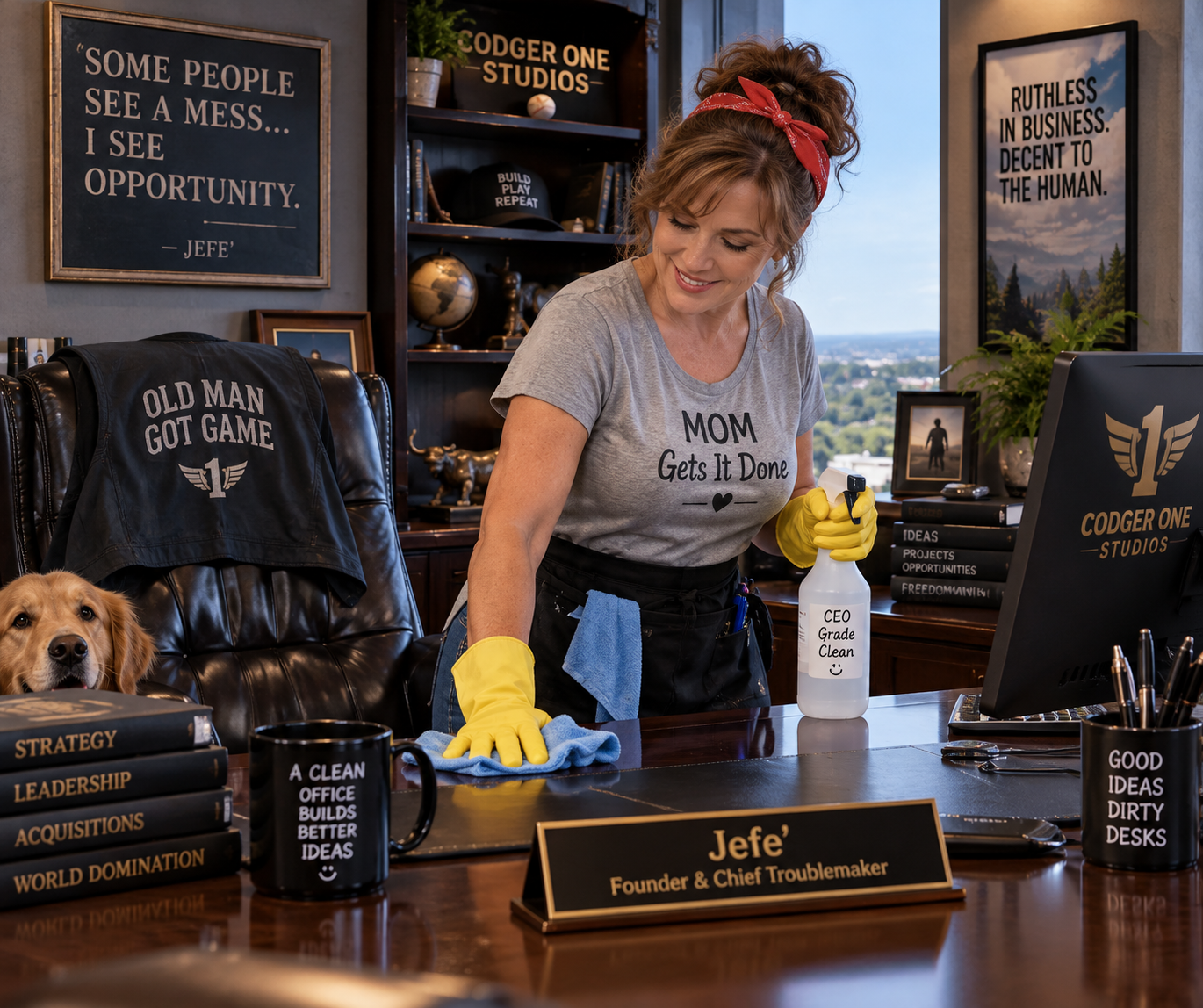
Somebody asked me:
“Can I give another player one of my companies?”
Sure.
After your momma finishes cleaning my office, I'm giving her one of mine.
Moving on.
The real answer is yes.
Because we're establishing a fairly dangerous rule in Corporate Warfare:
If you own it, you own it.
That Sounds Obvious
It isn't.
A lot of games tell you that you own something right up until you try to do something the developers don't like with it. Then suddenly there are guardrails everywhere.
We don't want that.
If you build a company in Corporate Warfare, ownership should mean something.
Sell it. Give it away. Sell part of it. Bring in a partner. Surrender control. Make a brilliant deal. Make a catastrophically stupid deal.
It's yours.
And freedom without the ability to screw something up isn't much freedom.
Ownership Needs Consequences
Corporate Warfare is being built as a business strategy MMO and economic simulation game driven by players.
That means ownership can't just be a number in a database. It creates risk.
Maybe you sell part of a company because you need cash. Maybe you bring in another player because you need what he has. Maybe that partnership builds an empire.
Or maybe six months later you're sitting there wondering how that son of a bitch ended up owning your company.
Now we've got a game.
Those are the stories we're interested in creating at Codger One Studios. Not scripted stories. Stories created because players have enough freedom to make decisions that actually matter.
The Rules Have to Let You Fail
Obviously, cheating and exploits aren't gameplay.
But making a terrible business decision? Trusting the wrong person? Selling something you later desperately want back? Starting a fight you can't finish?
That's different.
That's Tuesday.
As Corporate Warfare game development continues, this principle is going to affect a lot more than company ownership: money, deals, partnerships, competition and power.
The bigger question we're asking isn't, “How do we protect players from making bad decisions?”
It's: What happens when we let them make them?
Because sometimes the best game mechanic isn't another guardrail.
Sometimes you hand the player the keys and see what the hell happens.
And apparently—your momma owns a company now.